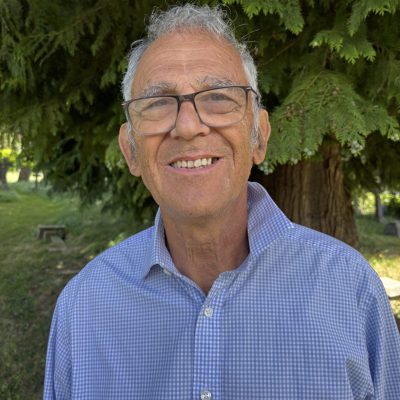

I was born in Muswell Hill in 1947 and grew up there with my parents and my brother, who was ten years older than me. From an early age, it was clear that I experienced the world differently. I did not begin speaking until I was four years old, and even then, my communication bore little resemblance to that of other children. Until around the age of seven, my responses could best be described as a curious mixture of an over-enthusiastic bird and Enid Blyton’s Noddy. I nodded vigorously, flapped my arms as if preparing for take-off, and expressed myself physically rather than verbally.
Although these behaviours can seem amusing when viewed through today’s lens, they were often misunderstood at the time. I was growing up with autism in an era when autism was rarely recognised and rarely supported. Children like me were not recognised as neurodivergent or in need of understanding and guidance; instead, we were labelled lazy, naughty, or unintelligent. This lack of insight left deep marks, shaping how I saw myself and how others treated me.
At the age of seven, my life took a profound turn when I became a Christian through my Sunday school teacher, Miss Tucker. She was a retired missionary who had spent many years working in China, and her stories captivated me. She spoke not only about distant places but also about Jesus in a way that made faith feel alive and personal. Crucially, she seemed to understand me in a way few adults had before. She encouraged me and supported my early attempts at fundraising for Methodist missionaries, helping me feel that I had purpose and value. 70 years of me fundraising for overseas charities followed.
As I grew up, I discovered that I am a visual thinker – someone whose thoughts come primarily in pictures rather than words. Looking back, this explains why Miss Tucker’s personal stories, and the Bible stories she shared, stayed with me so vividly. Even today, I can recall them in remarkable detail. My prayer life was shaped by this visual thinking; I imagined Jesus sitting beside my bed at night as my friend and comforter. That personal relationship sustained me during years when I felt painfully aware that I was not like other children.

The way I was treated by my family, by teachers and by school bullies was often hard to bear. I struggled to understand why I was different and why fitting in seemed so effortless for others but so impossible for me. My belief in God became my anchor. Faith gave me strength when understanding was absent, and hope when acceptance felt out of reach. Three friends from Sunday school also played a vital role in helping me survive my difficult childhood and teenage years, offering companionship and loyalty when I needed it most.
I imagined Jesus sitting beside my bed at night as my friend and comforter.”
It was not until I was 27 that my faith deepened in a new and powerful way. I moved from simply knowing Jesus to experiencing the power of the Holy Spirit. At that time, I was feeling particularly low. I was working in the antiques department at Harrods, but my sales record was poor. My autism made it extremely difficult to approach customers, and I felt trapped by my limitations. Then two remarkable things happened, with God’s help.
First, a colleague named Roger recognised my potential and helped me see that change was possible. He encouraged me to become more confident and enthusiastic; he believed in me when I had very little faith in myself. Second, I became involved in the Harrods Christian Fellowship, led by Sandy Millar of Holy Trinity Brompton. Through his teaching and example, I discovered that being a Christian was not something dull or passive but something to be excited about. I learned what it meant to live in the power of the Holy Spirit, and my life was transformed.
During this period, God gave me a clear visual image of the young woman who would one day become my wife. Not long afterwards, I met Jenny. We have now been married for 49 years, and she has been one of God’s greatest gifts in my life. Since discovering the power of the Holy Spirit, I have lived with a deep sense of joy, fulfilment and purpose.
My memoir, I’m Autistic! Get Me Out Of Here – My Christian Journey on the Autistic Spectrum, reflects on a time when neurodiversity went largely unrecognised. Growing up without a diagnosis left me with a sense of inferiority and constant confusion about why I was not like other children. In the book, I portray my childhood with honesty and clarity, sharing both the struggles I faced and the resilience I found through my faith in Jesus.
Since discovering the power of the Holy Spirit, I have lived with a deep sense of joy, fulfilment, and purpose.”
Writing this book has been deeply encouraging, especially as I have discovered how strongly my story resonates with others. Many readers, like me, have felt out of place or longed to be understood. Autistic traits such as emotional expression, social reserve, or literal communication are often misinterpreted, leading to unnecessary barriers and hurt. My aim is to help bridge that gap, enabling church communities and wider society respond with empathy, clarity and genuine welcome.
My message is simple: understanding is not merely helpful – it is the first step toward true inclusion and lasting change. My story is one of struggle and triumph, but it is also intended as a bridge for neurotypical readers, particularly within church communities, who want to better understand and welcome autistic individuals. I show how relatively small adjustments – sensory-aware environments, predictable routines and respectful communication – can transform relationships and create spaces where autistic people feel safe, valued and included.
I’m Autistic! Get Me Out Of Here is available to purchase online. All proceeds from the book are donated by the author to The Neema Society, supporting street children and children with autism.

Autistic people are indispensable members of the body of Christ
For neurodiversity celebration week, Triona Brading shares her experience of church as an autistic Christian – and tips for making church a place autistic people feel welcome