On 2 November, the home secretary gave an updated statement to the Commons on the immigration and earned settlement policy. These reforms seek to change the pathway to settlement for migrants.
“We [Labour Party] will reform the points-based immigration system so that it is fair and properly managed, with appropriate restrictions on visas and by linking immigration and skills policy.”

The Labour Party
2024 General Election Manifesto, P41
The politics of immigration policy and the numbers arriving in the UK continue to be a dominant conversation and news headline.
Statistically, the numbers are decreasing compared to the year before yet remain high.
Towards the end of August, the Home Office published immigration system statistics, year ending June 2026 figures and an infographic to explain the different types of immigration to the country. The headline figures were that just over 2.1 million visitor visas were issued, and the three most popular visas issued were to study (386, 000 visas), work (235, 000) and/or for family (58, 000).

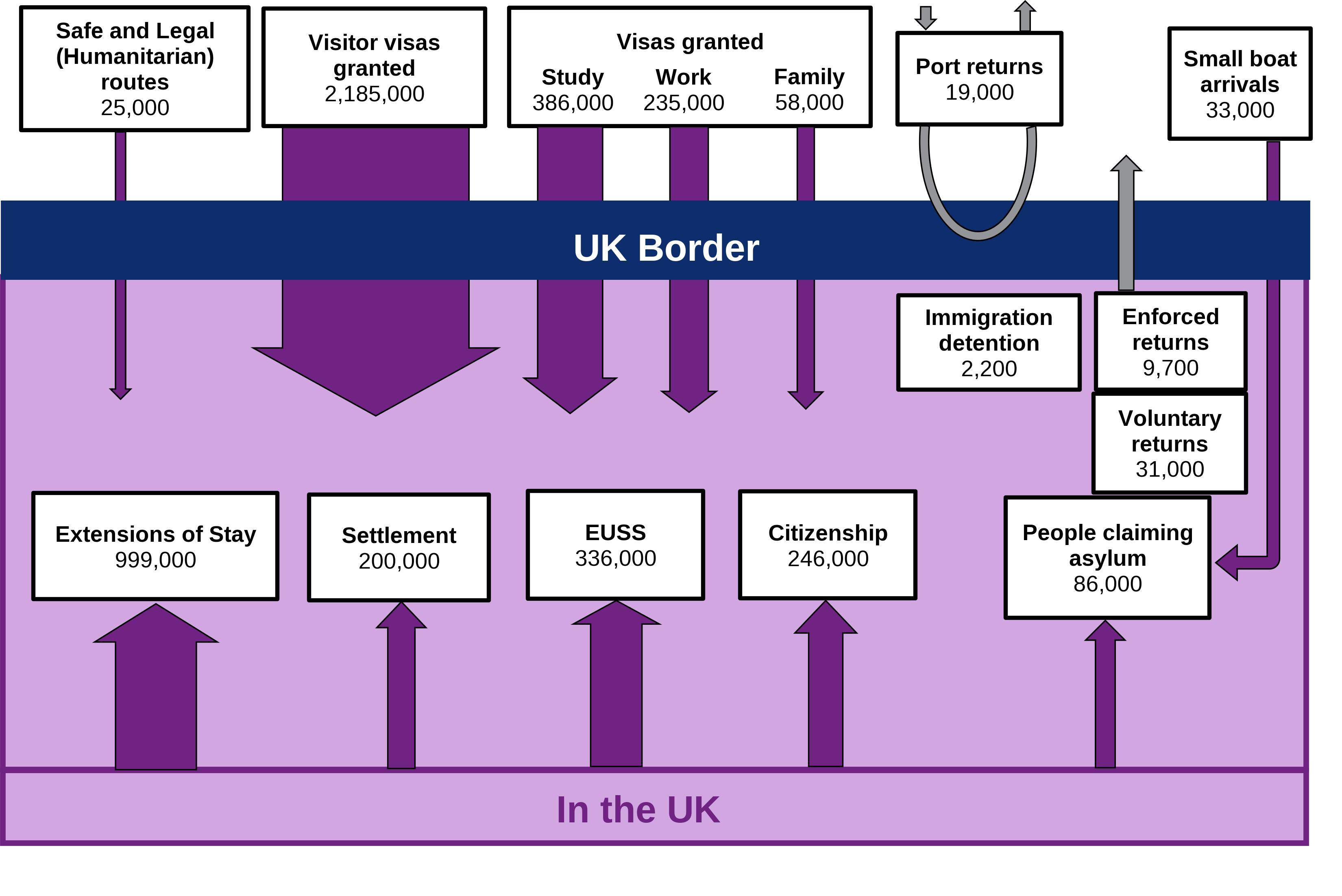
Across different national public opinion polls immigration remains within the top two policy areas of concern for Brits. Interestingly, the perception amongst Britons is that immigration figures remain too high (YouGov) and that when comparing views in 2016 to today, the majority view is that migration has ‘mostly been bad’ for the UK (YouGov).
High immigration numbers and negative public perception are driving the government to act.
A policy lever the government are currently exploring under the home secretary’s leadership is to reform pathways for foreign nationals acquiring permanent residence and therefore becoming a British citizen. It is the government’s position that ‘contribution’ and ‘integration’ must become a core principle to acquiring Indefinite Leave to Remain (IRL) or settled status in the UK.
Overview of the government’s earned settlement policy
In late 2025, the home secretary finally set out specific policy direction on immigration reforms through ‘A Fairer Pathway to Settlement’ consultation.
At the heart of these proposals, the government are seeking to change how migrants settle in the UK, placing greater emphasis on contribution. In the foreword to the 2025 consultation, the home secretary said, “to become a part of this country, permanently, is therefore not a right but a privilege – and one that must be earned.”
The existing rule for pathway to settlement on most visa types is for migrants to have lived in the UK for a period of at least five years. Once this time has passed it grants access to apply for public funds and then, a year on, an opportunity to apply for British citizenship if the individual so chooses. Under these proposals, the government are seeking to introduce the principle of earned settlement and increase the pathway to settlement from five years to ten for most immigration visas.

Four mandatory requirements to acquire earned settlement to the UK:
- Good character – the migrant can evidence character and good conduct under existing immigration visa.
- Integration – the migrant is able to converse in English well (B2 standard level).
- Contribution is evidence through ‘active participation in the economy’ and wider society.
- Residency – the migrant has continued residence in the UK.
Over 200,000 individuals and civil society groups responded to the call for evidence and many produced public statements outlining their concerns for the government’s proposed reforms. Caritas Social Action Network, the Catholic social action campaigning charity for the Catholic Bishop’ Conference of England and Wales, described the proposals as ‘“dehumanising” and “firmly reject a policy that makes people’s access to basic security a reward”.
The Evangelical Alliance’s engagement so far has been to write to the home secretary and outline how introducing earned settlement policy would impact many evangelical intercultural leaders and ministries sponsoring migrants on a Minister of Religion visa (T2) with a plan and desire to permanently reside in the UK to continue on in ministry. We received an initial response but are awaiting further response from the Human Rights, Family and Settlement unit within the Home Office.
The earned settlement policy has been met with strong opposition from some civil society groups and divides opinion within the Labour cabinet.
Ahead of the Labour Party conference this September, the housing and community secretary Angela Rayner, shared in an interview with The Times on how she believed the home secretary and colleagues’ plans were “unfair” because they were “changing the goalpost” for so many.
Fast forward, and two months later, following growing pressure from fellow cabinet ministers the home secretary made a statement in the Commons announcing a policy half-turn on 2 November. She remains committed to the earned settlement policy, but the thresholds have changed slightly. The longer-term question remains whether the home secretary will find support for these reforms amongst Labour backbenches and wider society?
Where Christian migrants should pay attention on policy changes
“The right to live in this country forever must now be earned; it will no longer be automatic. This is a fair settlement for all.”

The Rt Hon Shabana Mahmood KC MP
Secretary of state for the home department
The home secretary updated the House of Commons on changes to the earned settlement policy ahead of official publication on the government website. Pathways to settlement reforms will come into effect through immigration rule changes starting from December 2026 and and incrementally throughout 2027.
Bereaved partners of British citizens, unaccompanied asylum-seeking children, children in care, victims of domestic abuse, armed forces and those on existing refugee resettlement pathways (for example Hongkongers, Afghans or on a community sponsorship scheme prior to April 2027) are exempt from earned settlement policy reforms. The pathway to settlement will look as follows over the coming year:
Pathways to settlement

Refugee pathways to settlement


Making sense of the government’s Immigration and Asylum Bill
Three sections of the bill that Christian ministries should be aware of